Publications
publications by categories in reversed chronological order. generated by jekyll-scholar.
2027
- Funded
 Denmark’s Path to Economic Development: Structural Transformation, Free-Market Trade, and Migration from 1790 to TodayCasper Worm Hansen, Christian Vedel, and Asger Mose Wingender2027Funded by the Independent Research Fund Denmark (DFF), 2027–2030. I co-developed the application and am a named participant, with 465,879 DKK dedicated to my buyout.
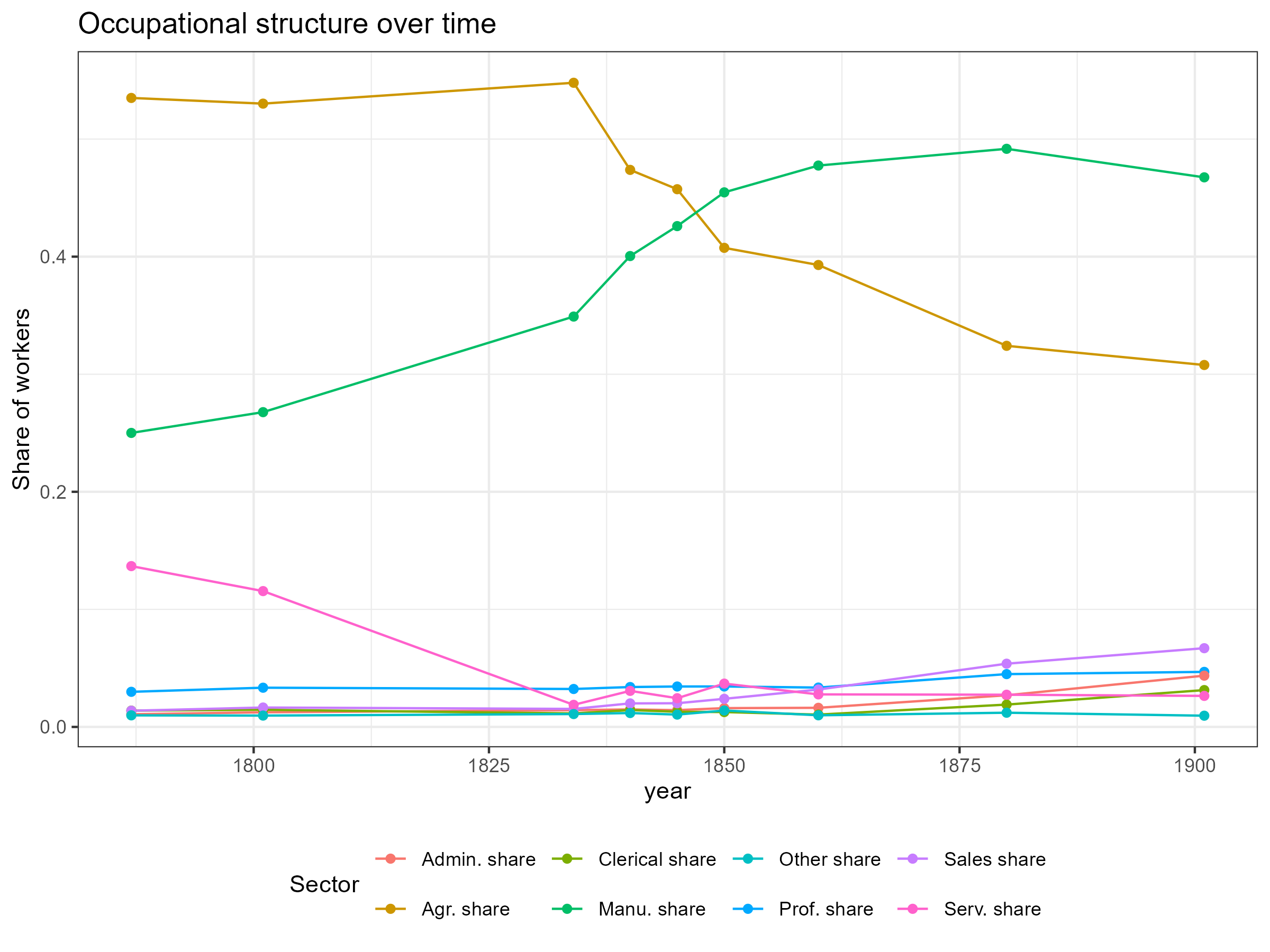
In this project we will use newly digitized historical data and machine learning to map the changing economic geography of Denmark from 1790 to today, and to ask how structural transformation, trade liberalization, and migration shaped regional inequality. The project consists of three work packages. In the first, we will construct a dataset on population, occupational structure, and incomes for every Danish municipality since 1790, and document how spatial inequality evolved across two centuries of industrialization, urbanization, and infrastructure change. In the second, we will exploit the 1857 Act on Freedom of Trade (Næringsfrihedsloven) — which abolished the trade monopoly of market towns — as a quasi-experiment to estimate the causal effects of internal free-market trade on rural development and regional inequality. In the third, we will digitize historical migration flows to study how local economic conditions pushed and pulled internal migrants from the 1930s onward, and whether such migration reduced or widened regional disparities.
2026
- Pub
 Holy cows and spilled milk: The impact of religious missions on firm-level productivityJeanet Sinding Bentzen, Nina Boberg-Fazlić, Paul Sharp, Christian Volmar Skovsgaard, and Christian VedelJournal of Development Economics, 103651 , 2026
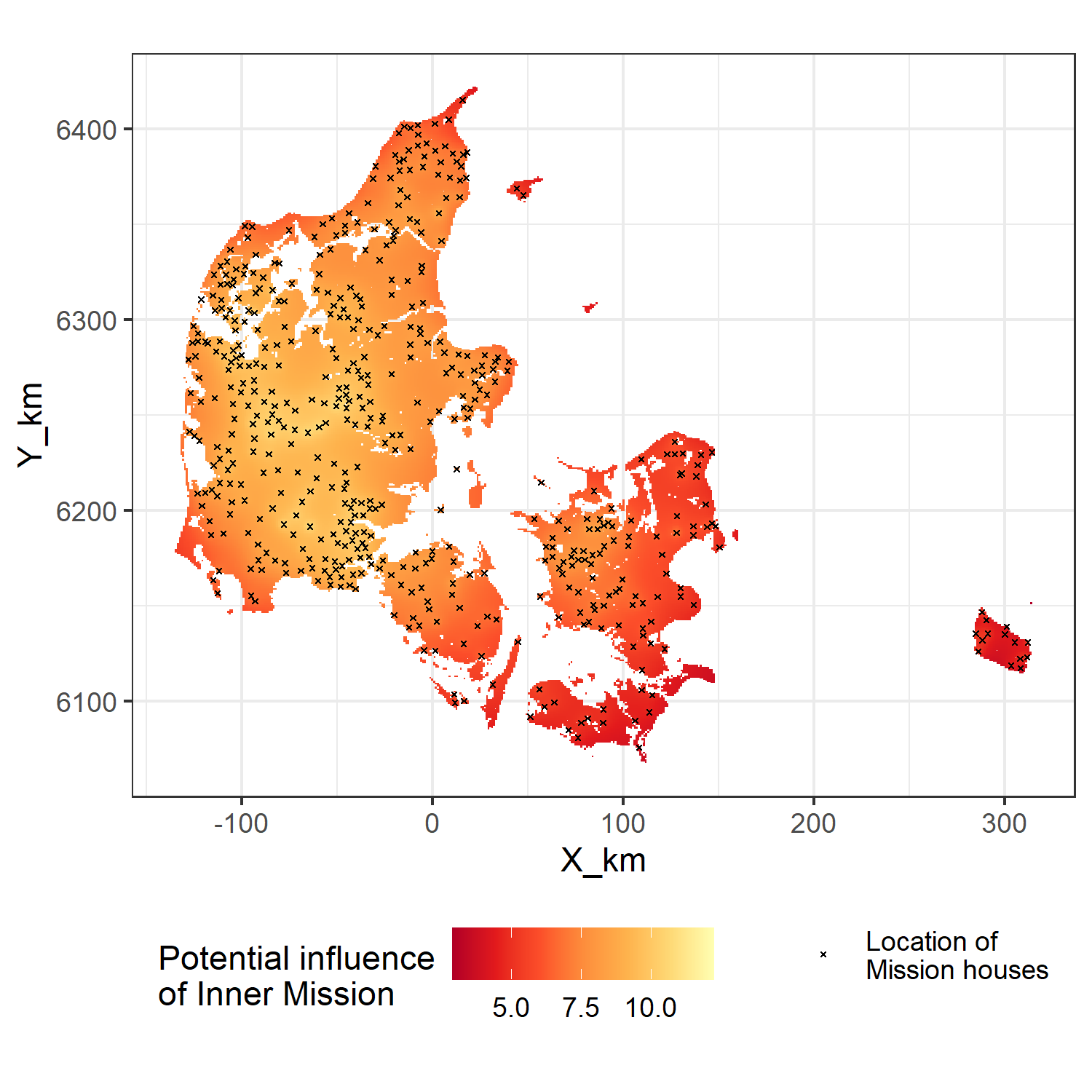
Did religious missions influence firm-level productivity? This study examines the impact of the Inner Mission movement on productivity in early twentieth-century Denmark, a predominantly Protestant and homogeneous society undergoing rapid industrialization. Using data on 964 creameries and an instrumental-variables approach, we provide evidence that Inner Mission intensity reduced productivity in butter production, measured by the milk-to-butter ratio. The main mechanisms were Sunday closures, which disrupted economies of scale, and the fragmentation of creameries due to doctrinal disagreements among farmers. The results show how religiosity shaped patterns of modernization absent the usual colonial or missionary confounders, speaking to debates in development economics about how informal institutions and moral regulation can constrain firm behavior and productivity.
@article{vedel2026holycows, title = {Holy cows and spilled milk: The impact of religious missions on firm-level productivity}, author = {Bentzen, Jeanet Sinding and Boberg-Fazlić, Nina and Sharp, Paul and Skovsgaard, Christian Volmar and Vedel, Christian}, journal = {Journal of Development Economics}, year = {2026}, volume = {179}, doi = {10.1016/j.jdeveco.2025.103651}, } - Pub
 Ireland in a Danish mirror: A microlevel comparison of the productivity of Danish and Irish creameries before the First World WarEoin McLaughlin, Paul Sharp, Xanthi Tsoukli, and Christian VedelBusiness History, 68(3), 596–612 , 2026
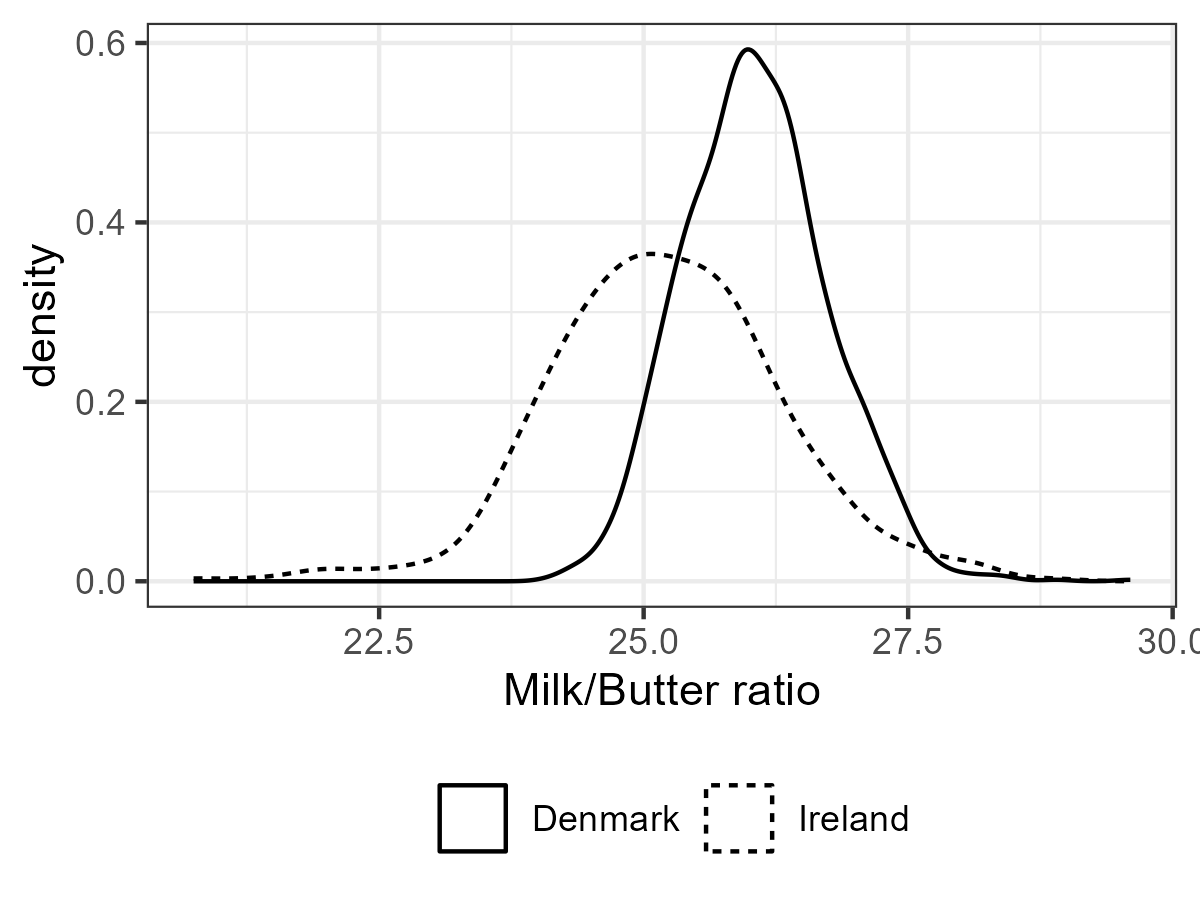
The relative success of the Danish and failure of the Irish dairy industries before the First World War is often contrasted. The traditional narrative assumes that the Irish failed because they were unsuccessful at adopting cooperative ownership, and that Irish cooperatives were not as efficient as their Danish counterparts, despite having been explicitly modelled on them. This is, however, untested at the firm level. We rectify this through the analysis of a large microlevel database of creameries in both countries over 1898–1903. Using Stochastic Frontier Analysis, we find that Irish creameries were in fact slightly more efficient on average than their Danish counterparts, though with a larger variance — nuancing the idea that the Irish were unable to establish cooperatives successfully.
@article{mclaughlin2026ireland, title = {Ireland in a Danish mirror: A microlevel comparison of the productivity of Danish and Irish creameries before the First World War}, author = {McLaughlin, Eoin and Sharp, Paul and Tsoukli, Xanthi and Vedel, Christian}, journal = {Business History}, year = {2026}, volume = {68}, doi = {10.1080/00076791.2025.2486643}, } - WP
 A Perfect Storm: First-Nature Geography and Economic DevelopmentChristian VedelUnder review, Journal of the European Economic Association · Job market paper · EHES Working Paper 262 · first circulated 2024; latest version , 2026
Winner of the Economic History Society’s 2023 New Researcher Prize.
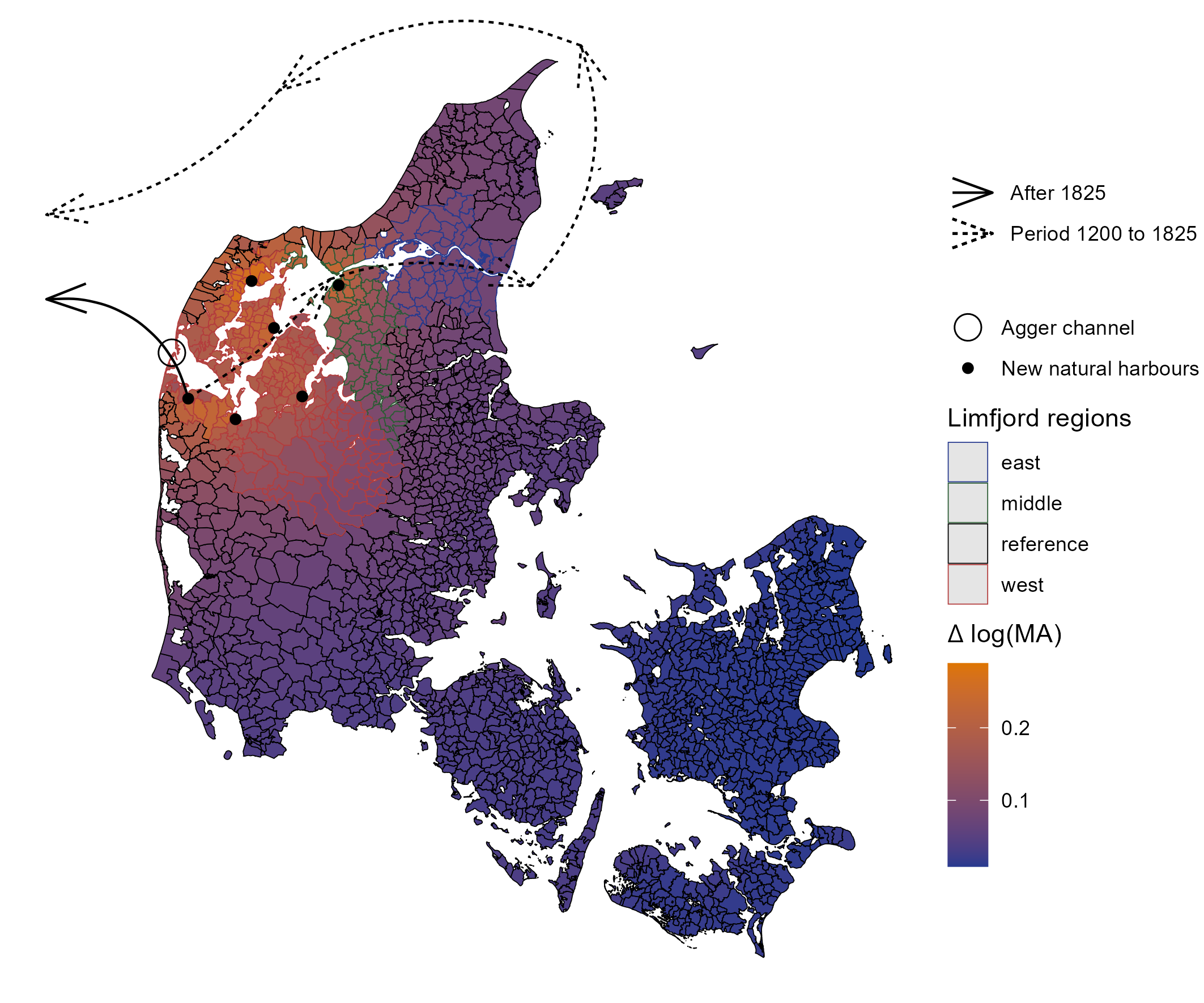
First-nature geography shapes the location of prosperity. I provide evidence by investigating the effects when it suddenly changes. In 1825 a storm breached the Agger Isthmus, connecting Denmark’s west Limfjord region to the North Sea. I demonstrate that trade followed, and prosperity relocated with it: population rose 27 percent within a generation — an elasticity of 1.6 relative to market access — with occupational shifts toward fishing and manufacturing. Fertility, not migration, drove the expansion. A mirror experiment, the waterway’s closure circa 1086–1208, caused symmetric declines in medieval coin and building finds.
@unpublished{vedel2024perfectstorm, title = {A Perfect Storm: First-Nature Geography and Economic Development}, author = {Vedel, Christian}, year = {2026}, } - WP
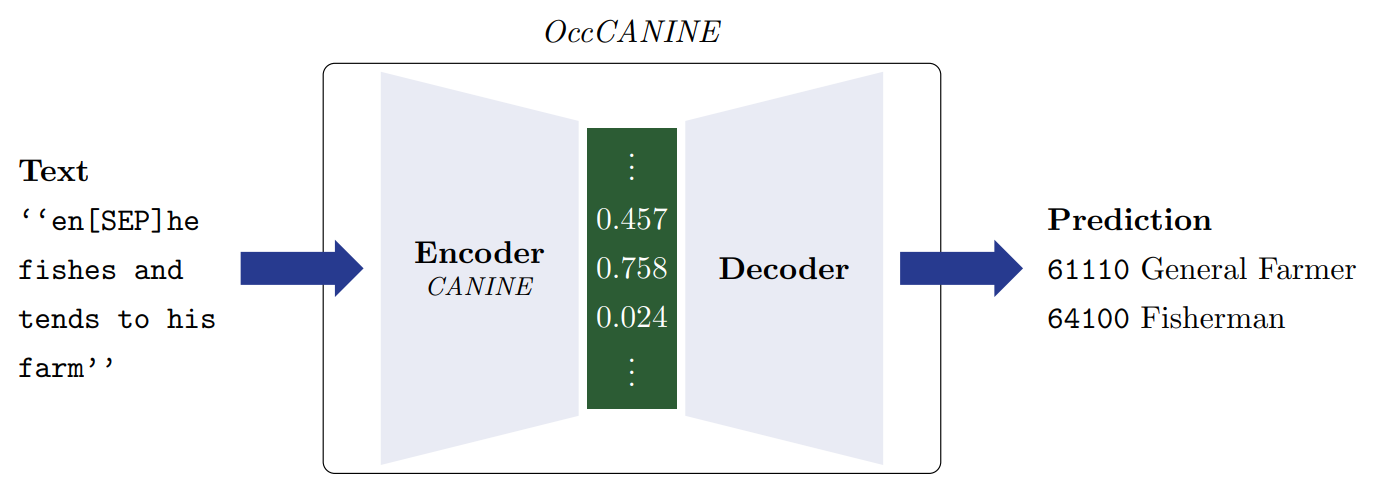 Breaking the HISCO Barrier: Automatic Occupational Standardization with OccCANINEChristian Møller Dahl, Torben Johansen, and Christian Vedel2026R&R, Explorations in Economic History · EHES Working Paper 255 · first circulated 2024
OccCANINE is an open-source tool that maps occupational descriptions to HISCO codes, replacing weeks of manual coding with results in minutes. We fine-tune CANINE on 15.8 million description–code pairs from 29 sources in 13 languages, achieving 96 percent accuracy, precision, and recall. The approach generalizes to three further systems — OCC1950, OCCICEM, and ISCO-68 — all released open source. By breaking the “HISCO barrier,” OccCANINE democratizes access to high-quality occupational coding, enabling broader research in economics, economic history, and related disciplines.
@unpublished{vedel2024occanine, title = {Breaking the HISCO Barrier: Automatic Occupational Standardization with OccCANINE}, author = {Dahl, Christian Møller and Johansen, Torben and Vedel, Christian}, year = {2026}, note = {R\&R, Explorations in Economic History · EHES Working Paper 255 · first circulated 2024}, } - WP
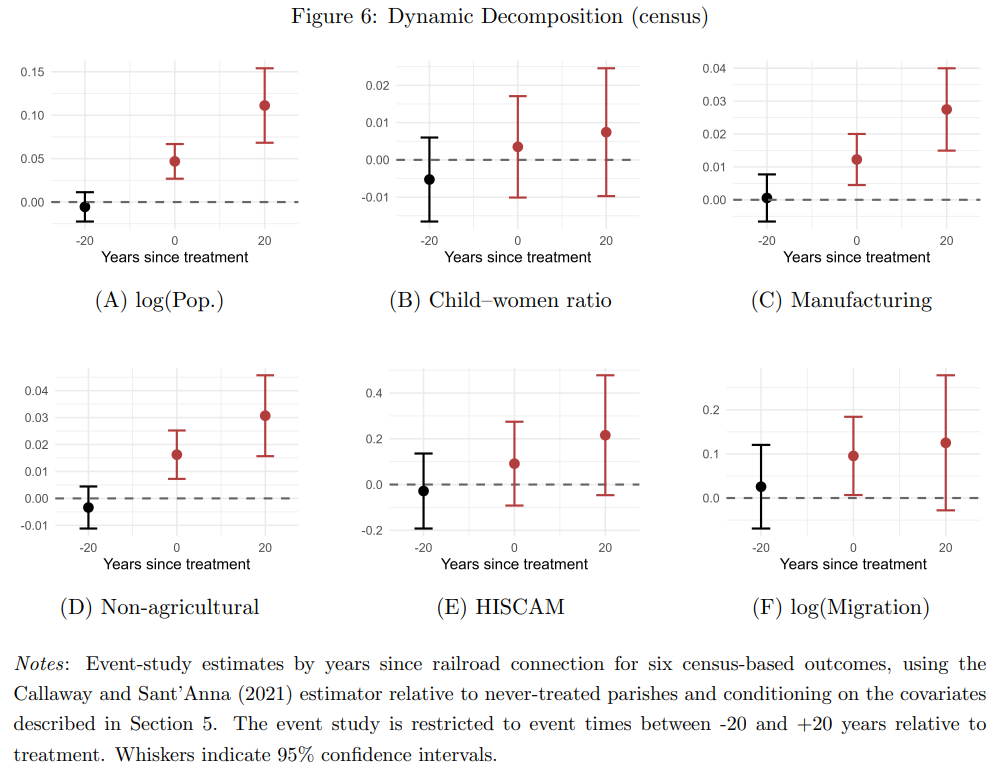 Tracks to Modernity: Railroads, Growth, and Social Movements in DenmarkTom Görges, Magnus Ørberg Rove, Paul Sharp, and Christian VedelR&R, European Review of Economic History · first circulated 2025 , 2026
We examine how railway expansion shaped Denmark’s nineteenth-century economic transformation and the diffusion of civic engagement in the form of Grundtvigian institutions. Using a new parish-level panel (1,589 parishes) and a difference-in-differences design that accounts for staggered adoption, we find that railroad connection increased local population by about 7 percent, driven in part by higher internal in-migration, and accelerated structural change. Rail access also raised the probability that a parish hosted a folk high school and increased the local densities of folk high schools and community houses. Market access was thus not only a driver of economic modernization but also a catalyst for institutional and cultural transformation.
@unpublished{gorges2025tracks, title = {Tracks to Modernity: Railroads, Growth, and Social Movements in Denmark}, author = {Görges, Tom and Rove, Magnus Ørberg and Sharp, Paul and Vedel, Christian}, year = {2026}, } - WP
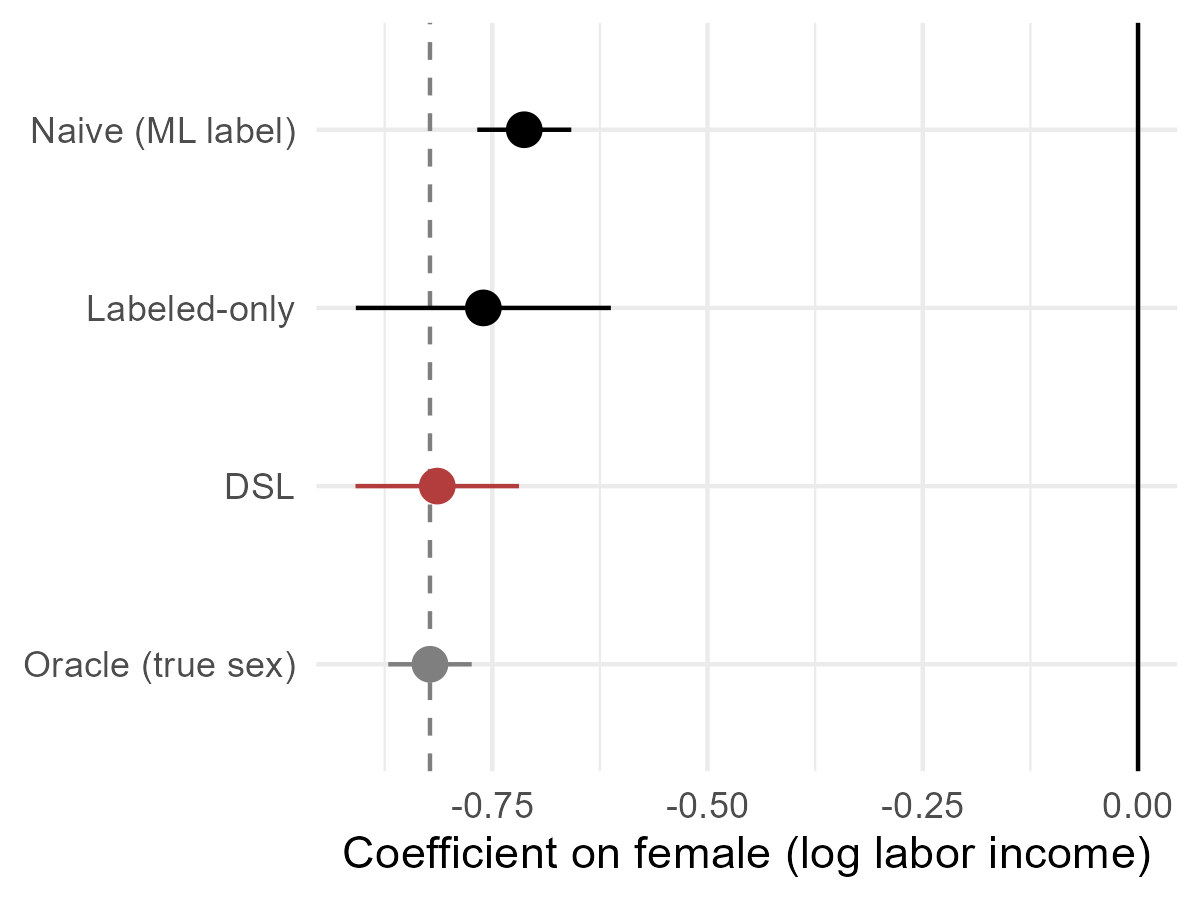 How to deal with machine learning bias in economic historyTorben Johansen, Julius Koschnick, and Christian Vedel2026
Machine learning (ML) has rapidly transformed economic history, lowering costs of digitization, data linkage, and imputation, and making information in historical text usable at scale. This paper offers a practical guide to using these tools well. However, ML tools have also created new problems. Prediction errors are often systematically correlated with covariates of interest, so even highly accurate models can distort and sometimes reverse coefficients, and standard validation cannot detect this. Given that ML tools often perform worse for historical data, this problem is especially severe for the field of economic history. We also identify a solution to this problem. We show that recent debiasing methods can correct such bias for a wide class of applications, using a small, randomly sampled set of expert-coded labels while retaining the efficiency of large-scale prediction. We organize the field with a taxonomy of three ML tasks, survey the literature along it, and indicate where debiasing applies and where validation against proxies remains the only recourse. We close with best-practice guidance on digitization, model choice, and reproducibility.
@unpublished{vedel2026mleh, title = {How to deal with machine learning bias in economic history}, author = {Johansen, Torben and Koschnick, Julius and Vedel, Christian}, year = {2026}, } - WP
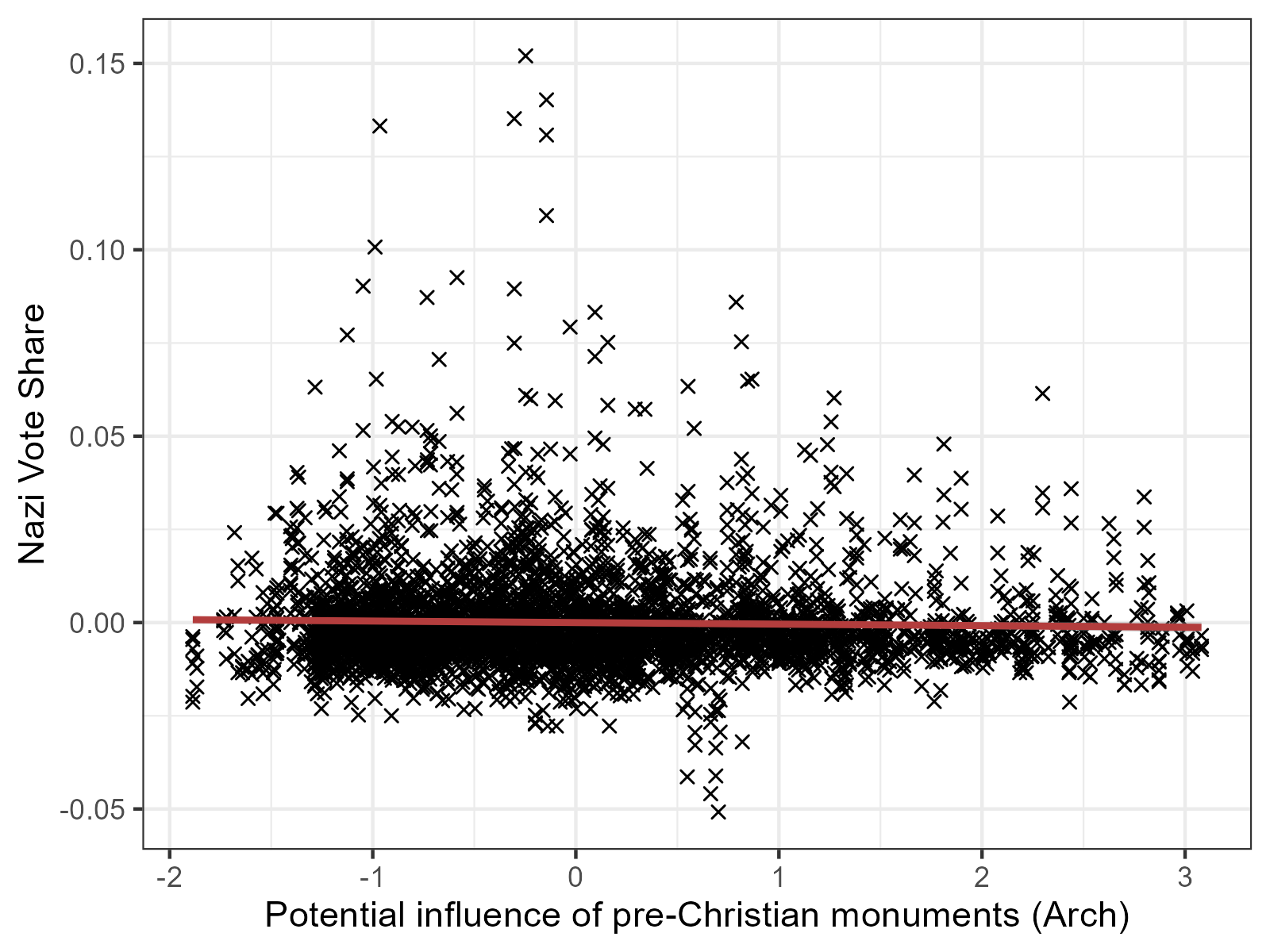 Physical Memories of the Past and Support for the Far-Right: Evidence from Inter-War DenmarkLasse Aaskoven and Christian Vedel2026EHES Working Paper 295
A growing literature concerns the role of symbolic politics, including how political parties benefit electorally from politicizing the past — a strategy that should be more effective in localities with physical memories of the past. We test this by studying the effect of the local concentration of pre-Christian monuments on electoral support for the Danish Nazi Party — a far-right party that relied heavily on the symbols of Denmark’s pre-Christian past — in parliamentary elections 1935–1943. In contrast to the proposed argument, we find no evidence that localities with more pre-Christian monuments saw greater support for the Nazi Party, hinting at the limits of symbolic politics and pointing to the scope conditions for the political effects of physical memories as a fruitful avenue for future research.
@unpublished{aaskoven2026physical, title = {Physical Memories of the Past and Support for the Far-Right: Evidence from Inter-War Denmark}, author = {Aaskoven, Lasse and Vedel, Christian}, year = {2026}, note = {EHES Working Paper 295}, } - WIP
 CHAOS: Converting Historical Accounts into Occupational ScoresMatthew Curtis, Torben Johansen, Julius Koschnick, and Christian Vedel2026Early results; presenting at conferences
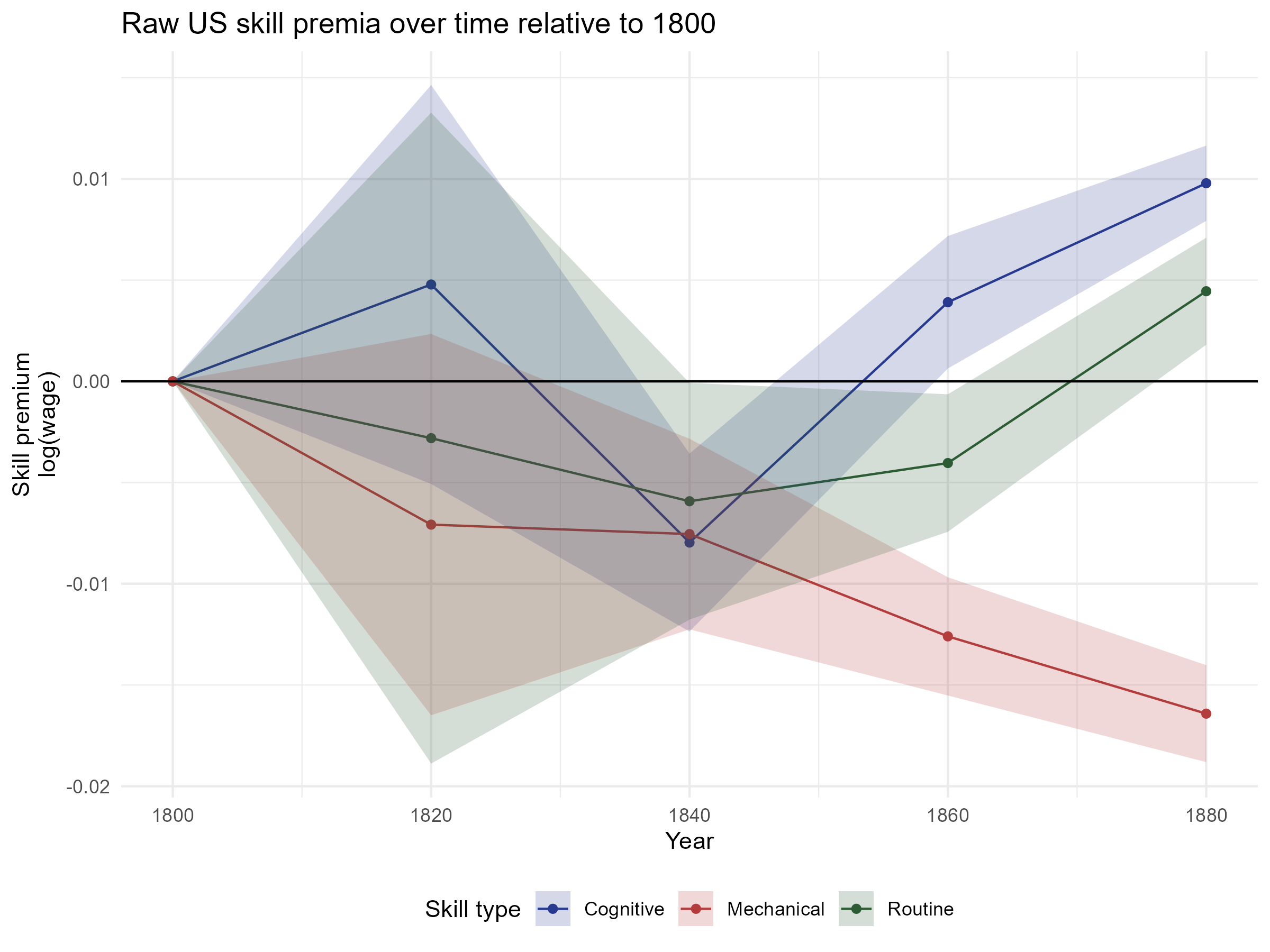
History is rich in information about people’s occupations but far less forthcoming on outcomes such as income, wealth, or skills. A widely used solution is to proxy these outcomes by averages within occupational categories—so-called occupational scores—of which IPUMS OCCSCORE is the most prevalent. But existing scores rely on fixed benchmarks such as 1950 U.S. wages, discard ambiguity in historical titles, and are difficult to adapt across time and space; constructing a new score by hand for every project is infeasible. This paper introduces CHAOS, a replicable, automatic, and interpretable framework for converting historical occupational descriptions into outcome estimates given any source. The key insight is that every occupational score is a weighted average of observed outcomes, where the weights reflect the relevance of each piece of source information. These relevance weights can be estimated automatically using a classification algorithm such as OccCANINE—and the classifier’s own uncertainty, which would otherwise bias the resulting scores, can be removed with a transparent correction. Alongside the estimator we provide diagnostics that report, for any score, how much source evidence stands behind it. We demonstrate the utility of CHAOS through an application to historical wage reports covering 88,000 occupation–income pairs across U.S. states and other countries spanning the 19th century. Following the occupations of Campbell’s 1747 London Tradesman through the 18th and 19th centuries, we use these estimates to trace the evolution of skill premia across the Industrial Revolution.
@unpublished{wip_chaos, title = {CHAOS: Converting Historical Accounts into Occupational Scores}, author = {Curtis, Matthew and Johansen, Torben and Koschnick, Julius and Vedel, Christian}, year = {2026}, note = {Early results; presenting at conferences}, } - WIP
 Copenhagen Tax Book Project: 2.1 Million Taxpayer Records, 1862–1919Casper Worm Hansen, Christian Vedel, and Asger Mose Wingender2026Work in progress
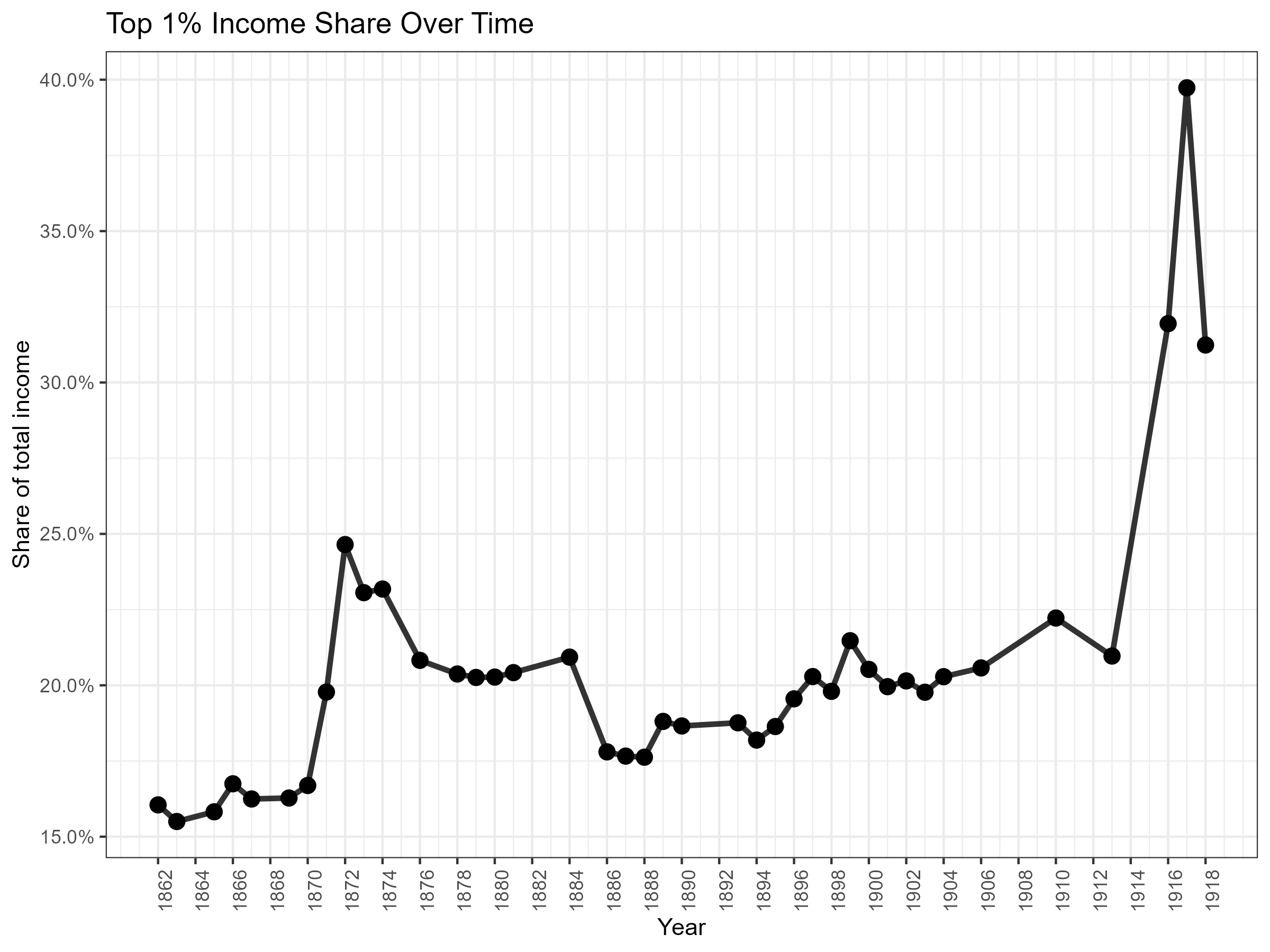
We digitize 2.1 million individual records from Copenhagen’s income and wealth tax books (1862–1919) using a large language model (Google Gemini) pipeline. Because the books were kept annually, individuals can be tracked year by year — each record carries an address, an occupation, and an income, and in some cases wealth. With this longitudinal panel we reconstruct the evolution of income and wealth inequality, top income shares, and occupational structure in the city across the late nineteenth and early twentieth centuries.
- WIP
 Counting houses: Mapping late medieval populations using the DOMUS modelChristian Vedel and Chiara Zanardello2026Work in progress
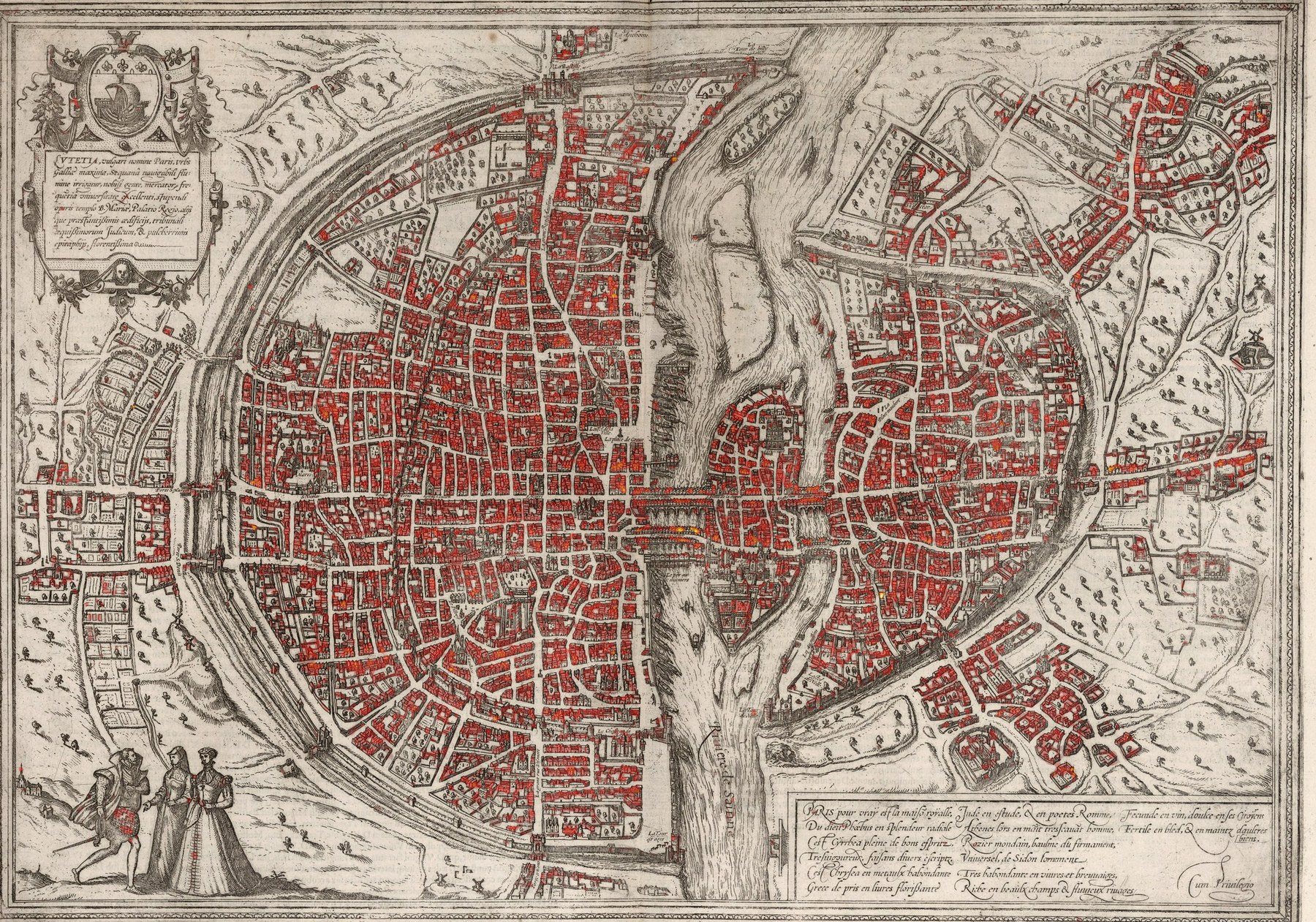
Historical city-population databases (Bairoch, Bosker et al., Buringh) rely heavily on imputation before 1800. We ask whether machine learning can recover new population information from historical city engravings. DOMUS (Density-based Object Mapping of Urban Structures) treats building detection as density regression: annotators place one click per visible structure, each click becomes a Gaussian bump, and a neural network (ResNet-18 or ViT-S/16 encoder) is trained to predict the resulting density map, whose integral is the building count. We apply the model to the Civitates Orbis Terrarum (Braun and Hogenberg, 1572–1617; 543 views of 475 towns). Against Buringh’s 1550 population estimates, DOMUS counts have a log–log elasticity of 0.71 overall and 1.13 when restricted to plan and bird’s-eye views, while profile views carry no signal — the count measures what the engraver chose to show. Next steps are validation against city-specific archival sources and extension to the Merian, Blaeu, and Resen atlases.
2024
- Pub
 Adaptability, diversification, and energy shocks: A firm level productivity analysisSofia Teives Henriques, Paul Sharp, Xanthi Tsoukli, and Christian VedelEnergy Economics, 107887 , 2024
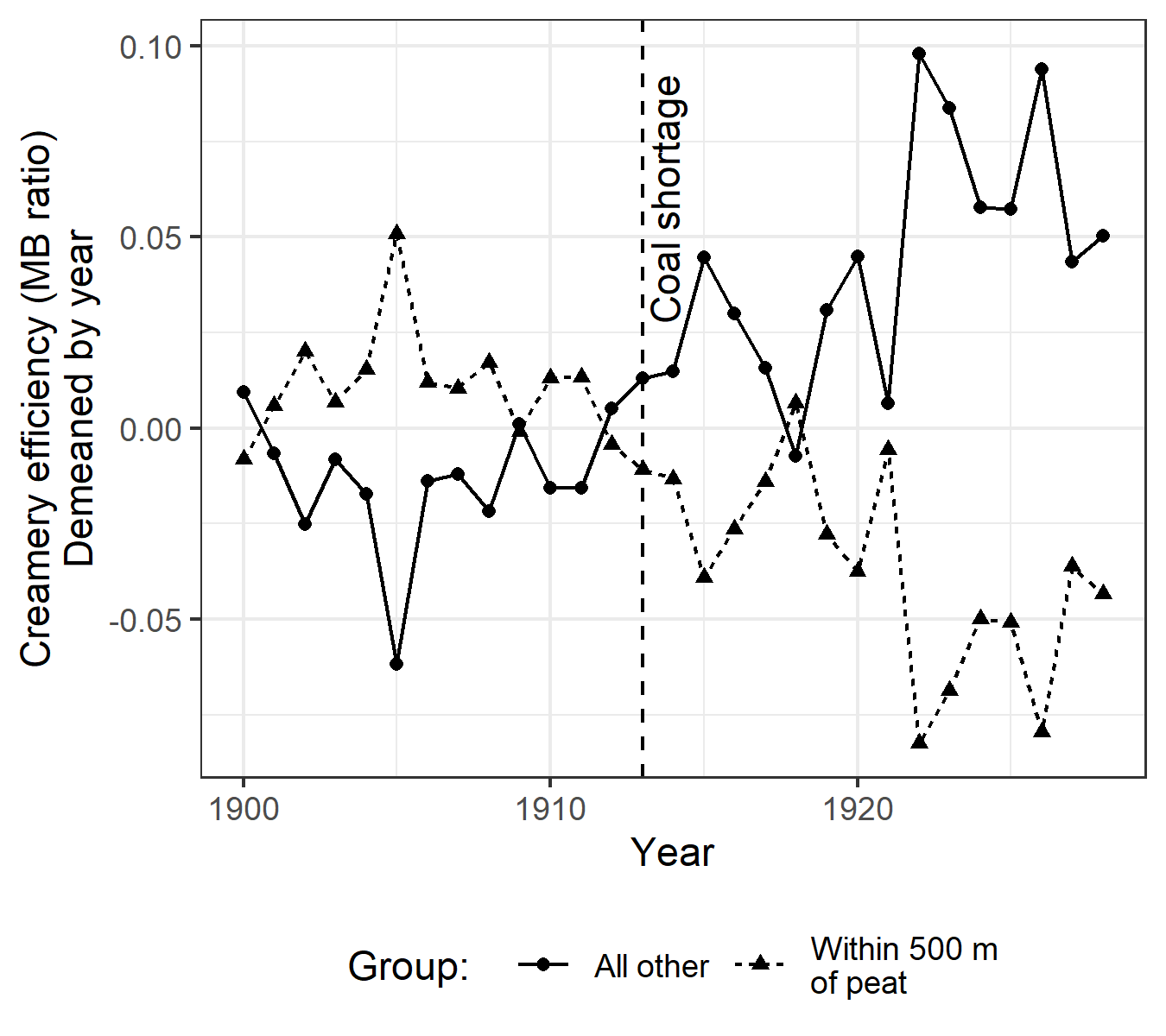
Energy economists have long argued that energy systems need to be adaptable in the face of shocks. In the early twentieth century, Denmark embodied the opposite, with its industry almost entirely dependent on imports of coal from the UK. Towards the end of the First World War and into the 1920s, coal imports became expensive and harder to obtain, but local diversification was possible through peat. We exploit detailed microlevel data from butter factories covering 1900–28. Employing an event-study approach, we find significant productivity advantages for firms closer to available peat fields in the wake of the coal shortage, and that these gains persisted even when peat was no longer used. The results suggest that public policy might aim to support adaptability for firms less able to transition to more sustainable energy.
@article{henriques2024energy, title = {Adaptability, diversification, and energy shocks: A firm level productivity analysis}, author = {Henriques, Sofia Teives and Sharp, Paul and Tsoukli, Xanthi and Vedel, Christian}, journal = {Energy Economics}, year = {2024}, volume = {139}, doi = {10.1016/j.eneco.2024.107887}, } - Pub
 A Microlevel Analysis of Danish Dairy Cooperatives: Opportunities for Large Data in Business HistoryPaul Sharp, Sofia Teives Henriques, Eoin McLaughlin, Xanthi Tsoukli, and Christian VedelEnterprise & Society, 25(3), 669–697 , 2024
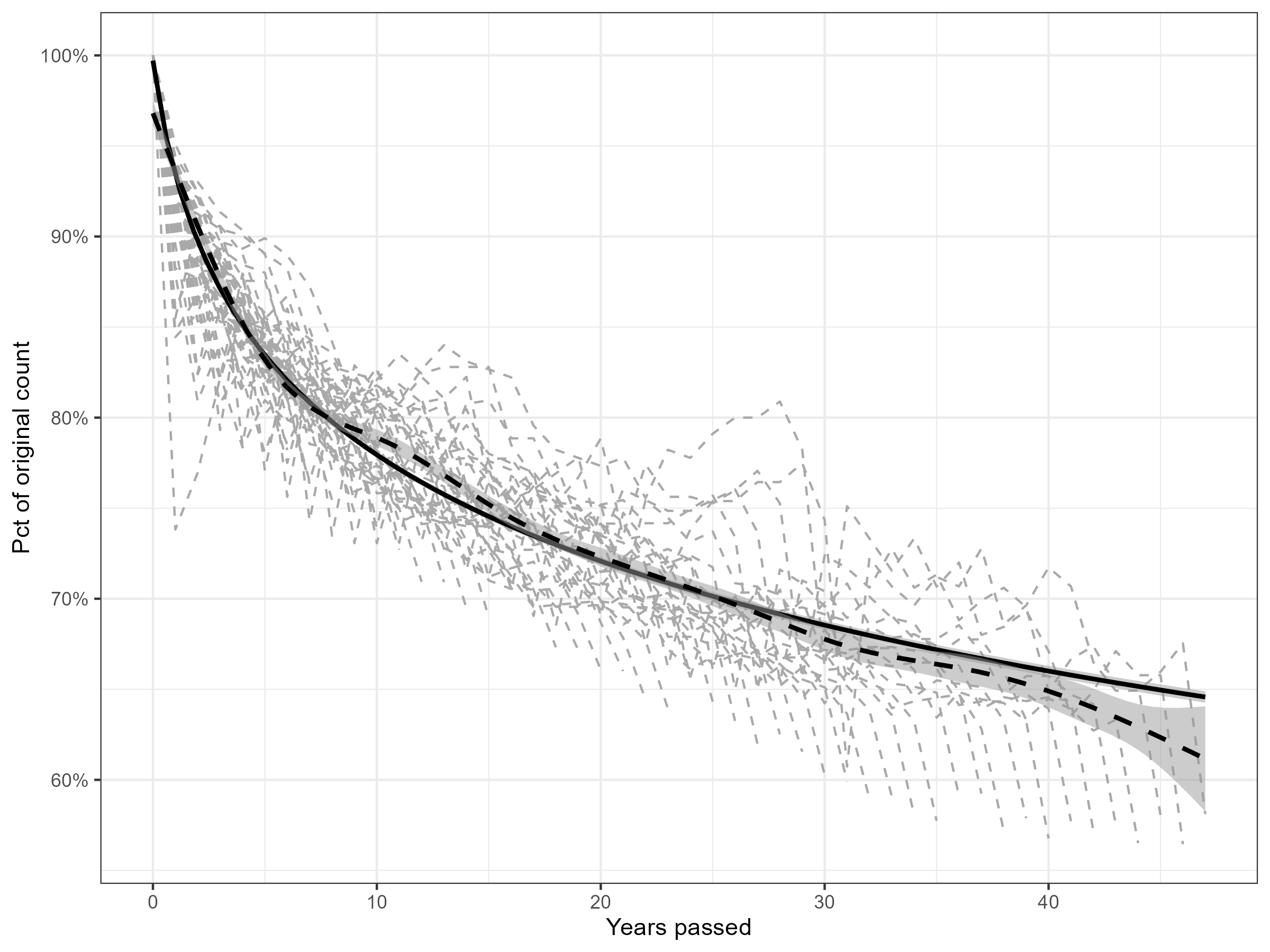
We contribute to the argument for a “new” business history employing a quantitative approach, illustrating the opportunities from a novel microlevel longitudinal database comprising 131 variables for 1,419 cooperative creameries in Denmark over 1898–1945, which we also document and make available to the scholarly community. We present a number of applications of the data, including investigating regional productivity differences, expenditure on fire insurance, and survivorship and reporting biases.
@article{sharp2023cooperatives, title = {A Microlevel Analysis of Danish Dairy Cooperatives: Opportunities for Large Data in Business History}, author = {Sharp, Paul and Henriques, Sofia Teives and McLaughlin, Eoin and Tsoukli, Xanthi and Vedel, Christian}, journal = {Enterprise \& Society}, year = {2024}, volume = {25}, doi = {10.1017/eso.2023.5}, } - Pub
 A Firm Level Database of Irish Creameries, 1897–1921Eoin McLaughlin, Paul Sharp, Xanthi Tsoukli, and Christian VedelIrish Economic and Social History, 51(1), 48–74 , 2024
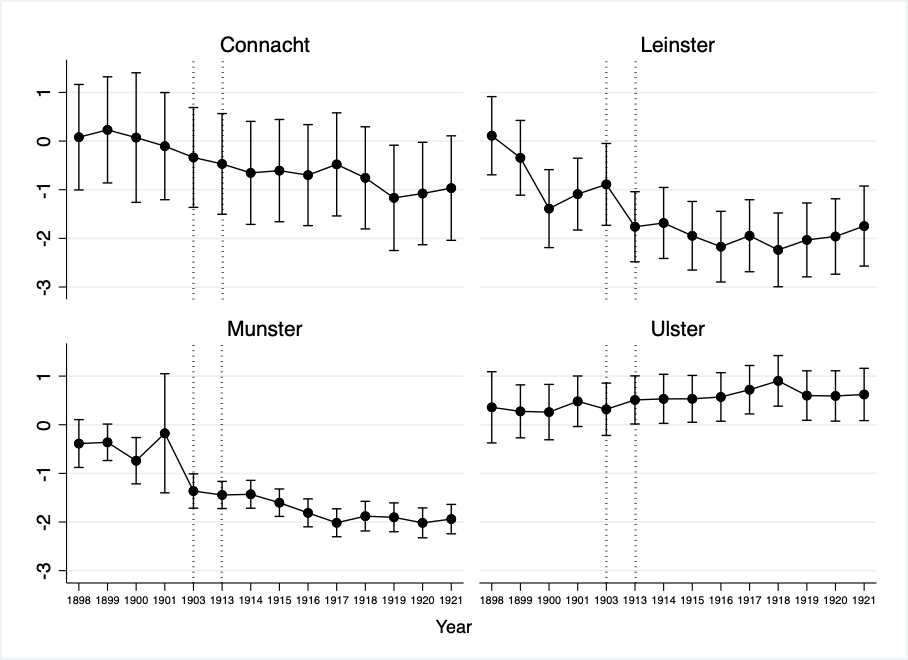
We present a microlevel database of Irish cooperative creameries covering 1897–1921, hand-collected from the annual reports of the Irish Agricultural Organisation Society (IAOS), containing information from 531 creameries across 49 variables. Our initial analysis finds considerable heterogeneity in productivity as measured by the milk/butter ratio. Focusing on the four historical provinces, we find that the south of Ireland — the historical centre of butter production — was on average less productive than the north at the start of the period, though this changes after 1913 when Ulster becomes the least productive province.
@article{mclaughlin2023irishdb, title = {A Firm Level Database of Irish Creameries, 1897--1921}, author = {McLaughlin, Eoin and Sharp, Paul and Tsoukli, Xanthi and Vedel, Christian}, journal = {Irish Economic and Social History}, year = {2024}, volume = {51}, doi = {10.1177/03324893231161927}, } - WP
 Milk Wars: Cooperation, Contestation, Conflict and the Irish War of IndependenceEoin McLaughlin, Paul Sharp, Christian Volmar Skovsgaard, and Christian Vedel2024EHES Working Paper 272
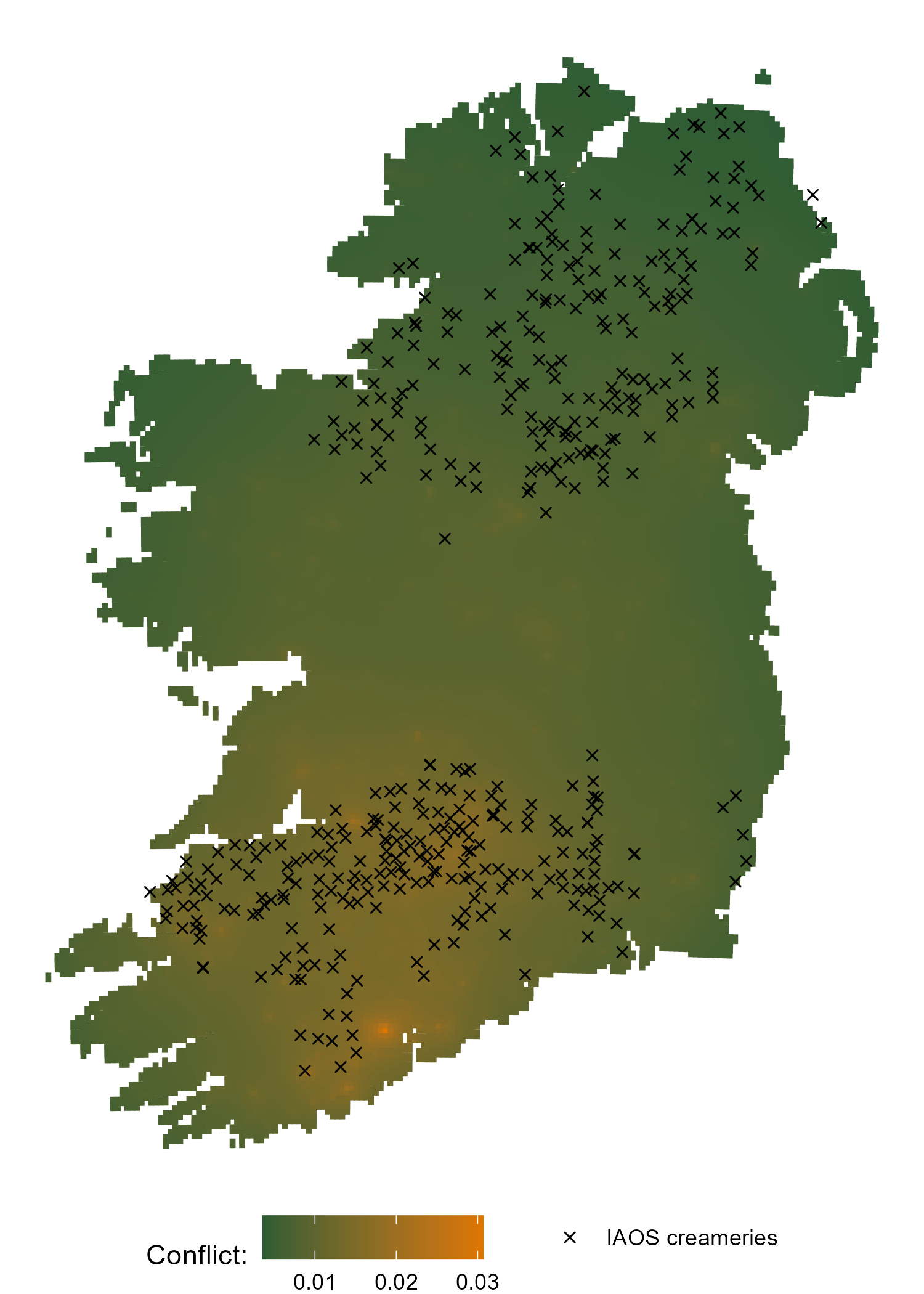
Agricultural cooperation is seen as a way to solve collective action problems and has been associated with high social capital. But what if it comes into conflict with existing private concerns? The Irish dairy cooperatives from the 1890s entered a contested market for milk and soon became associated with conflict: legal disputes and physical violence. We hypothesize that this led to poor social capital, manifesting in conflict during the Irish War of Independence. Analyzing novel data on cooperative and private creameries alongside measures of conflict, we find a significant positive correlation between the presence of cooperatives and local conflict intensities, robust to confounders and validated by an instrumental-variable approach. Cooperation might thus both reflect social capital and have pernicious impacts on it.
@unpublished{mclaughlin2024milkwars, title = {Milk Wars: Cooperation, Contestation, Conflict and the Irish War of Independence}, author = {McLaughlin, Eoin and Sharp, Paul and Skovsgaard, Christian Volmar and Vedel, Christian}, year = {2024}, note = {EHES Working Paper 272}, } - WP
 Assimilate for God: The Impact of Religious Divisions on Danish American CommunitiesJeanet Sinding Bentzen, Nina Boberg-Fazlić, Paul Sharp, Christian Volmar Skovsgaard, and Christian Vedel2024EHES Working Paper 253
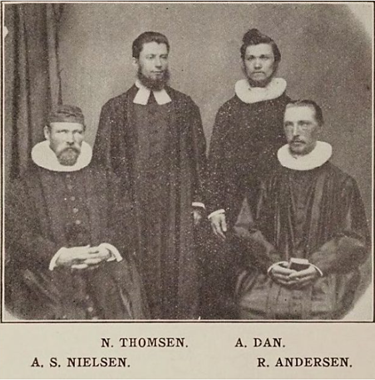
The cultural assimilation of immigrants is often equated with prospects for economic success, with religion seen as a potential barrier. We investigate the role of ethnic enclaves and churches for the assimilation of Danish Americans using a difference-in-differences setting. Following the ordination of a divisive religious figure in 1883, this otherwise homogeneous group split into rival Lutheran camps — the “Happy” and “Holy” Danes — the former seeking to preserve Danish culture, the latter encouraging assimilation. Using the US census and Danish American church and newspaper archives, we find that Danish Americans in a county with a “Happy” church chose more Danish names for their children, while newspapers read by “Holy Danes” saw faster Anglicization. Religious beliefs thus facilitated assimilation, with divergence emerging only after the division.
@unpublished{bentzen2024assimilate,
  title = {Assimilate for God: The Impact of Religious Divisions on Danish American Communities},
  author = {Bentzen, Jeanet Sinding and Boberg-Fazlić, Nina and Sharp, Paul and Skovsgaard, Christian Volmar and Vedel, Christian},
  year = {2024},
  note = {EHES Working Paper 253},
}